Right off the bat: browser wallets have changed everything. Seriously? Yep. They let you move across Ethereum, BSC, Arbitrum, Polygon, and newer chains without leaving your browser. That convenience is intoxicating. My instinct said “this is great,” and then reality checked me—phishing, rogue approvals, and bad UX can turn that convenience into very expensive mistakes.
Here’s the thing. A multi-chain extension wallet is not just a convenience tool. It’s a trust boundary sitting between you and a lot of potentially risky code. You want one that makes chain management obvious, surfaces approvals clearly, and simulates transactions when possible. Otherwise you’re relying on memory, tiny UI cues, and hope. And hope is not a security strategy.
What makes a good multi-chain browser wallet?
Short answer: clarity, control, and composability. Longer answer: the wallet should let you see which chain you’re on, which account is active, and what contracts you’re approving before the transaction goes out. It should also support hardware wallet integration, let you manage contract allowances granularly, and, ideally, simulate a transaction so you can catch obvious errors before signing.
Okay, so check this out—some wallets hide chain switching in tiny menus. That bugs me. You want chain and account shown in big, readable text. And a clear indicator when a dApp asks to switch chains. If a dApp requests a chain switch unexpectedly, pause. Really pause. Don’t just click through because the UI looks familiar.
On the technical side, look for these features:
- Explicit chain indicator and explicit account label
- Per-contract allowance management (revoke/limit allowances)
- Hardware wallet support (Ledger/Reality or other secure signers)
- Transaction simulation or gas breakdown before approval
- Clear history of signed transactions and incoming contract calls
Practical security habits for daily DeFi
I’ll be honest: good habits are 80% of staying safe. Use a cold or hardware wallet for large sums. Use a hot wallet for small, active trading. Create named accounts for different purposes—savings, staking, test funds—and keep them distinct. This keeps blast radius small if something goes sideways.
Another habit: reduce approvals. Approve exact amounts when you can. Many DEXes and yield platforms ask for “infinite” approvals—skip it if the interface lets you use a limited allowance. Periodically review and revoke allowances you no longer need.
Also—this one’s practical—set a small buffer of native token for gas on each chain you use. Failing to do so can leave transactions stuck and force you to frantic troubleshooting while a scam attempts to social-engineer you. Somethin’ about a stalled swap always attracts scammers.
Dealing with phishing and malicious dApps
Phishing is the oldest trick in the book, but it evolves. Fake dApp domains, copycat UI, or transaction signing requests that look routine but do dangerous things. My first impression of a dApp can be “this looks legit” and that’s the danger—your brain fills in trust when the visuals match prior experience.
So: verify URLs, use bookmarks for dApps you trust, and check the contract address before signing uncommon transactions. If a site asks for a wide-scope approval or to manage funds beyond one-time swaps, treat that as a red flag and dig deeper. On one hand the UX makes things fast—though actually slow, careful checks are better.
Why transaction simulation and previews matter
When a wallet shows you a detailed preview—destination, method, token amounts, slippage, and estimated post-swap balances—that’s huge. Simulation tools can catch reentrancy attempts, front-running traps, or a broken calldata that would call an unexpected function. Initially I thought the gas estimate was enough, but then I realized simulation would have flagged several oddities I’d signed through in the past.
Not every wallet offers simulation. If yours doesn’t, be extra cautious: copy the contract call data into a block explorer or a simulator if you can. Wallets that integrate simulation remove a lot of guesswork.
Choosing a specific wallet — a note about Rabby
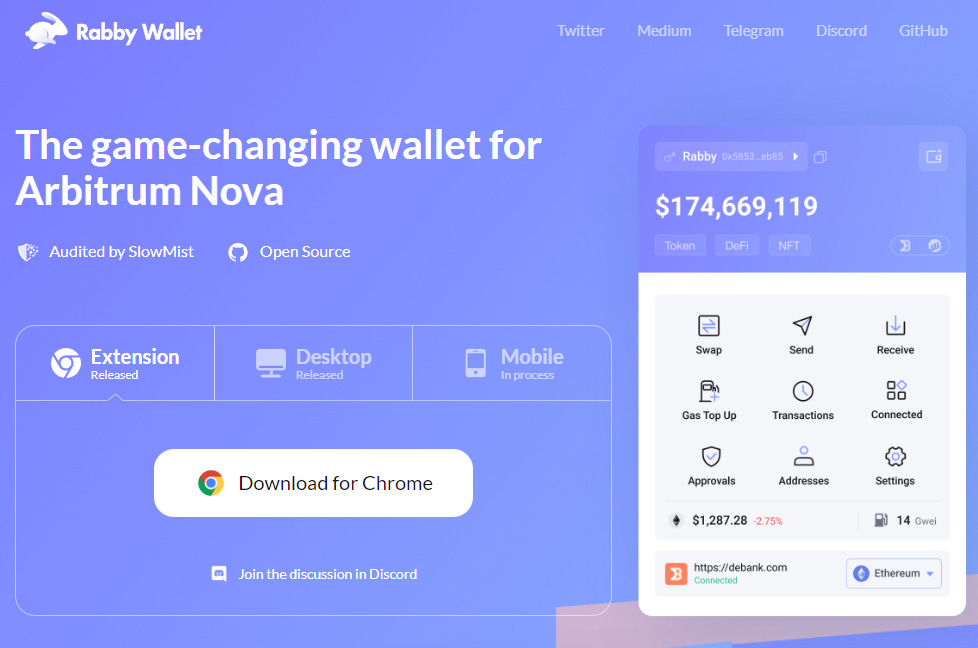
If you’re evaluating wallets, try one that was built with DeFi power users in mind—features like approval management, transaction simulation, and a multi-chain focus are priorities. I’ve used a few, and one that stands out for that mix of features is Rabby. If you want to test it, here’s a place to get started with a vetted installer: rabby wallet download. Use official sources and verify signatures when available.
Why mention Rabby? It’s not perfect. But it prioritizes approvals, shows chain context, and has thoughtful UX for advanced flows—things that keep me less anxious when I’m juggling a dozen dApps. That said, I’m biased toward wallets that make risks visible, not hidden.
FAQ — quick hits
How do I split funds between hot and cold wallets?
Decide a threshold (e.g., $500–$2,000) that you keep in a hot wallet for everyday moves; keep the rest in a hardware or cold storage wallet. Use separate named accounts in your extension and never mix large transfers during active sessions on unfamiliar dApps.
What if a dApp asks me to switch chains?
Pause and check. Is the dApp known to operate on that chain? Is the request expected for the action you’re taking? If unsure, disconnect and reopen the dApp via a bookmark or performed via a trusted aggregator.
Are built-in swap aggregators safe?
Aggregators can be convenient but check the routes and approvals. They may return a path that includes wrapping/unwrapping or rare tokens. Look for clear slippage and price impact info and prefer aggregators that show route transparency.